.jpg)
March 25, 2026
How Judgment Attorneys Address Intentional Judgment Avoidance TacticsJudgment attorneys help creditors overcome debtor avoidance tactics by locating assets and pursuing lawful enforcement strategies after a court ruling.


Merchant cash advance collections can significantly affect a business’s credit profile and its ability to secure future financing if not handled properly. While merchant cash advances are not traditional loans, collection activity arising from defaults, disputes, or breached agreements can still create lasting financial and legal consequences for business owners.
Understanding how collections influence creditworthiness, lender confidence, and financing opportunities is critical for merchants seeking long-term stability and for funders enforcing their contractual rights.
Merchant cash advance collections can negatively impact a business's credit score when defaults or judgments are reported to commercial credit bureaus.
Although MCAs do not typically appear on consumer credit reports, collection actions, liens, or court judgments may be reflected in business credit files maintained by agencies such as Experian Business or Dun & Bradstreet. These negative entries can lower a business's credit score and remain visible to lenders and vendors.
In addition, unresolved collection disputes can signal financial instability, making it harder for a business to demonstrate reliability during credit evaluations.
Collection activity signals increased risk to lenders evaluating future financing applications.
Banks and alternative lenders assess a business’s payment history, litigation exposure, and outstanding obligations before extending credit. Evidence of collection actions suggests cash flow issues or contractual noncompliance, both of which reduce lender confidence.
Even if a business remains operational, prior collection disputes may result in higher interest rates, stricter terms, or outright financing denials.
Legal disputes tied to MCA agreements can restrict a business’s access to capital.
When collection efforts escalate into litigation, public court records may reveal lawsuits, judgments, or enforcement actions. These records are often reviewed during underwriting and can deter lenders from offering financing until disputes are resolved.
In many cases, businesses involved in ongoing disputes are viewed as high-risk borrowers regardless of current revenue performance.
MCA funders evaluate post-collection behavior to assess future risk exposure.
Funders often review whether a merchant cooperated during collections, attempted good-faith negotiations, or demonstrated compliance with revised payment arrangements. Businesses that ignore remittance obligations or obstruct enforcement actions may be deemed unreliable for future funding.
Conversely, resolving disputes efficiently can help mitigate reputational damage within the funding industry.
MCA collections can lead to cascading financial consequences beyond the original agreement.
Collection actions may involve account restraints, UCC enforcement, or contractual remedies that affect operational liquidity. These disruptions can interfere with payroll, vendor payments, and daily cash flow, increasing the likelihood of additional defaults.
Once a business enters a cycle of enforcement actions, regaining financial stability becomes increasingly difficult without professional intervention.
MCA collections follow contract-based enforcement rather than conventional loan recovery methods.
Unlike bank loans, merchant cash advances are structured as purchases of future receivables, which impacts how defaults and remedies are pursued. This distinction affects how disputes are litigated and enforced in court.
Understanding these differences is essential, as improper handling of collection disputes can worsen credit exposure and delay resolution.
A merchant cash advance attorney helps navigate collection disputes while protecting long-term business interests.
Legal counsel can assess contract terms, identify enforcement rights, and manage disputes before they escalate into damaging litigation. Early legal involvement often reduces the risk of judgments or aggressive enforcement actions.
Professional representation also ensures compliance with applicable laws while working toward efficient dispute resolution.
Strategic handling of collection disputes can preserve a business’s ability to obtain financing.
Businesses that resolve collection matters through negotiated settlements or structured resolutions may avoid prolonged litigation and public judgments. These outcomes are generally viewed more favorably by future lenders.
Working with a knowledgeable merchant cash advance lawyer allows businesses to address disputes without unnecessarily jeopardizing future funding opportunities.
Proactive dispute management minimizes the long-term impact of MCA collections on business credit.
Timely responses to collection notices, transparent communication, and legal guidance can prevent escalation. Businesses that take corrective action early are more likely to stabilize operations and rebuild lender trust.
Avoiding repeated disputes is key to restoring financial credibility.
Generally, MCA collections do not appear on personal credit reports unless a personal guarantee is enforced. However, related judgments may still impact personal financial standing.
Yes, lenders often review litigation history, and active or past lawsuits can reduce approval chances. Legal resolution improves financing prospects.
Judgments can remain visible for several years, depending on the reporting agency. Their impact may lessen over time but does not disappear immediately.
Yes, businesses can rebuild credit by resolving disputes, maintaining consistent payments, and improving cash flow management. Time and financial discipline are critical.
Legal counsel should be consulted as soon as a collection notice or dispute arises. Early intervention often limits long-term financial damage.
Judgment attorneys help creditors overcome debtor avoidance tactics by locating assets and pursuing lawful enforcement strategies after a court ruling.

Courts evaluate bad-faith merchant conduct in MCA breach lawsuits by reviewing contract terms, merchant actions, and financial evidence to determine whether repayment obligations were intentionally violated.

When multiple MCA funders compete for the same merchant receivables or assets, legal guidance helps determine priority rights, resolve disputes, and pursue structured recovery strategies while maintaining compliance.

When a merchant cash advance default occurs, funders must strategically decide early between settlement negotiations and litigation, and an experienced MCA collections attorney helps evaluate debtor behavior, financial exposure, and enforcement potential to determine the most effective recovery path.

Attorneys strengthen commercial debt recovery by tracing financial paper trails before litigation, allowing creditors to evaluate collectability, build stronger legal claims, and position cases for more effective enforcement.

Judgment recovery services help commercial creditors and funders enforce court-awarded debts and convert legal victories into actual financial recovery.

Cash flow disruptions from unpaid commercial accounts can threaten business stability, and involving a commercial collections lawyer helps creditors recover outstanding balances through structured and legally compliant collection strategies.

New York collection attorneys help businesses and funders recover charged-off commercial debt through strategic legal enforcement and structured recovery actions.

MCA funders face significant enforcement obstacles after judgment, making strategic action with a judgment collection lawyer essential for successful recovery.
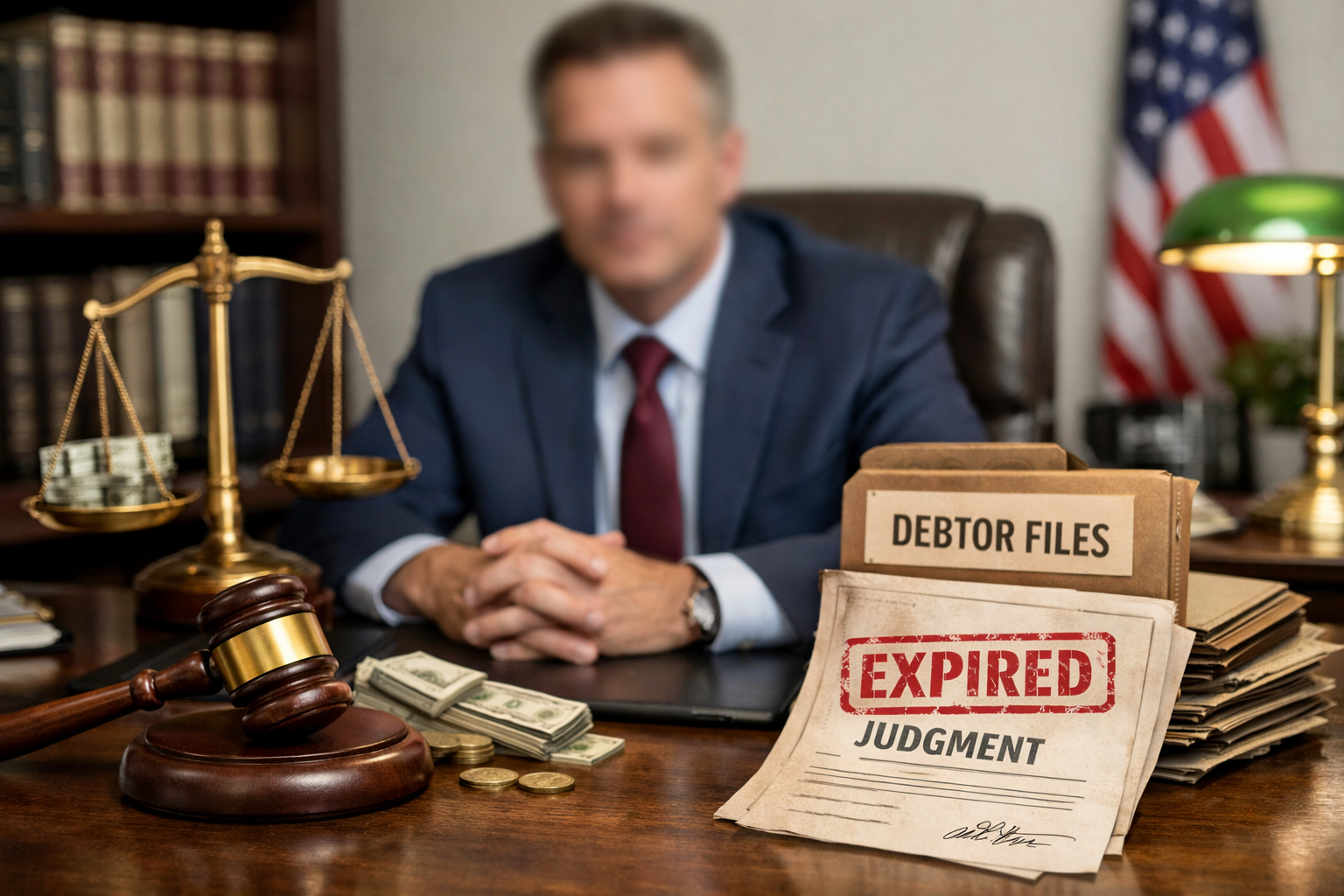
Funders must act quickly after obtaining a judgment to avoid expiration risks and preserve enforcement opportunities that lead to successful recovery.
.jpg)
Bankruptcy can significantly change how merchant cash advance obligations are handled, and an MCA attorney can help businesses and funders protect their financial and legal interests.

An MCA attorney can help businesses and funders recover overdue payments while protecting valuable customer relationships and enforcing contractual rights.

Understanding current trends in debt collection litigation helps funders maximize recovery, maintain compliance, and leverage the expertise of a local debt collections attorney.

Local legal expertise ensures funders and lenders can efficiently recover debts, enforce contracts, and protect their business interests with a skilled debt collections attorney.
.jpg)
Enforcement of judgment is the key mechanism that allows commercial creditors and MCA funders to turn court victories into actual financial recovery.

Understanding the difference between enforcement of judgment and judgment collection helps creditors choose the most effective strategy to turn a court ruling into actual payment.

Usury and recharacterization claims are common defense tactics in MCA disputes, but strong contracts and strategic legal defense allow funders to enforce agreements effectively.

This article explains why commercial creditors need a judgment collections attorney to enforce court judgments across state lines, navigate multi-jurisdictional laws, locate debtor assets, and significantly increase recovery rates.

A post-judgment attorney protects funders from costly enforcement mistakes and maximizes successful judgment recovery through strategic legal action.

This guide explains when funders should turn overdue accounts over to a debt collection lawyer to protect recovery rates and enforce stronger legal remedies.

Working with an experienced Collection Attorney gives commercial creditors the legal power and strategic support needed to significantly increase their post judgment recovery rate.

A complete 2025 guide for funders on which U.S. states require commercial financing disclosures, deal thresholds, and practical compliance strategies.

This article explains how MCA funders can stay compliant by avoiding disguised-loan pitfalls, strengthening contracts, and partnering with collections attorneys to enforce receivables and recover funds effectively.

A clear guide explaining how creditors can legally revive dormant New York judgments and the role of a judgment enforcement attorney in the process.

New York’s 20-year judgment lifespan offers creditors extensive enforcement power, but strict renewal rules and complex lien timelines make strategic legal guidance essential.
This blog shows how MCA funders can use AI for smarter commercial debt recovery while relying on a collections lawyer to ensure compliance, enforceability, and risk mitigation.

This blog explains when courts may treat very small business debts like consumer debt and shows how MCA funders can use a collections attorney to ensure compliant, enforceable debt recovery.

Explore how changing laws, court rulings, and enforcement trends are reshaping merchant cash advance (MCA) collections — and what funders must do to stay compliant.

This article explains how interest, fees, and legal costs influence the real price of business debt collection and how attorneys help companies manage and reduce these costs effectively.
Learn how partnering with a collections attorney helps businesses prevent nonpayment by creating enforceable, legally compliant credit agreements tailored to commercial needs.