.jpg)
March 25, 2026
How Judgment Attorneys Address Intentional Judgment Avoidance TacticsJudgment attorneys help creditors overcome debtor avoidance tactics by locating assets and pursuing lawful enforcement strategies after a court ruling.


As a New York attorney representing judgment creditors, precision in the legal terminology and spelling is non-negotiable. One common point of confusion is the spelling of "judgment" versus "judgement." This article clarifies why "judgment" is the correct choice in US English. As a judgment attorney dedicated to commercial collections and enforcement, we must ensure our terminology reflects the same precision we apply to litigating and collecting on behalf of our clients.
Quick Answer: In the United States legal system, the correct spelling is Judgment.
In US English, "judgment" (without the "e") is the only correct spelling. In UK English, "judgement" with an "e" is typically used in everyday contexts, but "judgment" without the "e" becomes the preferred choice when it comes to legal matters. During my time in law school, I was taught to drop the "e" in "judgment" to adhere to standard American English, a practice I maintain to ensure precision in my legal writing. This distinction is critical for maintaining professionalism, particularly for judgment attorneys!
In the legal profession, spelling is not merely a matter of style—it is a matter of statutory compliance and professional authority.
To maintain the highest industry standards, US attorneys must look to the governing "entities" of our craft. The Bluebook: A Uniform System of Citation, which dictates the rules for all federal and state court filings, exclusively recognizes the spelling "judgment" (no 'e'). Similarly, Black’s Law Dictionary—the definitive legal resource—notes that while "judgement" exists in common parlance, "judgment" is the required technical term for a court's final determination.
Whether we are moving for Summary Judgment (CPLR 3212) or enforcing a Default Judgment against a merchant in the New York Supreme Court, our filings must be beyond reproach.
Here are examples of "judgment" in US English:
To maintain professionalism and avoid errors:
The spelling of the word judgment may seem minor, but for attorneys in the US, it’s a detail that reflects expertise and attention to accuracy. By using "judgment" without the "e," you align with legal standards and build trust with clients, banks, and courts. At our firm, we apply this precision to every aspect of representing our clients, from collections and lawsuits to litigation and judgment enforcement. For expert legal support, contact a judgment attorney who gets the details right, because in law, every letter counts.
Both spellings refer to the same concept, but "judgment" is the preferred spelling in American English. In British English, "judgement" is commonly used in general contexts, while "judgment" is standard in legal settings.
In the United States, "judgment" without the "e" is the correct and accepted spelling in all legal documents and court proceedings. Using "judgement" may be considered incorrect in formal legal contexts.
While "judgement" may appear in informal American writing, it is not standard. For formal and legal contexts, "judgment" is the appropriate spelling.
Despite "judgement" being common in British English, British legal systems adopt "judgment" to maintain consistency and clarity in legal terminology. This aligns with international legal standards.
Determine your audience's regional language preference: use "judgment" for American English and legal contexts, and "judgement" for general British English usage. Always use "judgment" in any legal context. Consistency in spelling throughout your documents is key.
Judgment attorneys help creditors overcome debtor avoidance tactics by locating assets and pursuing lawful enforcement strategies after a court ruling.

Courts evaluate bad-faith merchant conduct in MCA breach lawsuits by reviewing contract terms, merchant actions, and financial evidence to determine whether repayment obligations were intentionally violated.

When multiple MCA funders compete for the same merchant receivables or assets, legal guidance helps determine priority rights, resolve disputes, and pursue structured recovery strategies while maintaining compliance.

When a merchant cash advance default occurs, funders must strategically decide early between settlement negotiations and litigation, and an experienced MCA collections attorney helps evaluate debtor behavior, financial exposure, and enforcement potential to determine the most effective recovery path.

Attorneys strengthen commercial debt recovery by tracing financial paper trails before litigation, allowing creditors to evaluate collectability, build stronger legal claims, and position cases for more effective enforcement.

Judgment recovery services help commercial creditors and funders enforce court-awarded debts and convert legal victories into actual financial recovery.

Cash flow disruptions from unpaid commercial accounts can threaten business stability, and involving a commercial collections lawyer helps creditors recover outstanding balances through structured and legally compliant collection strategies.

New York collection attorneys help businesses and funders recover charged-off commercial debt through strategic legal enforcement and structured recovery actions.

MCA funders face significant enforcement obstacles after judgment, making strategic action with a judgment collection lawyer essential for successful recovery.
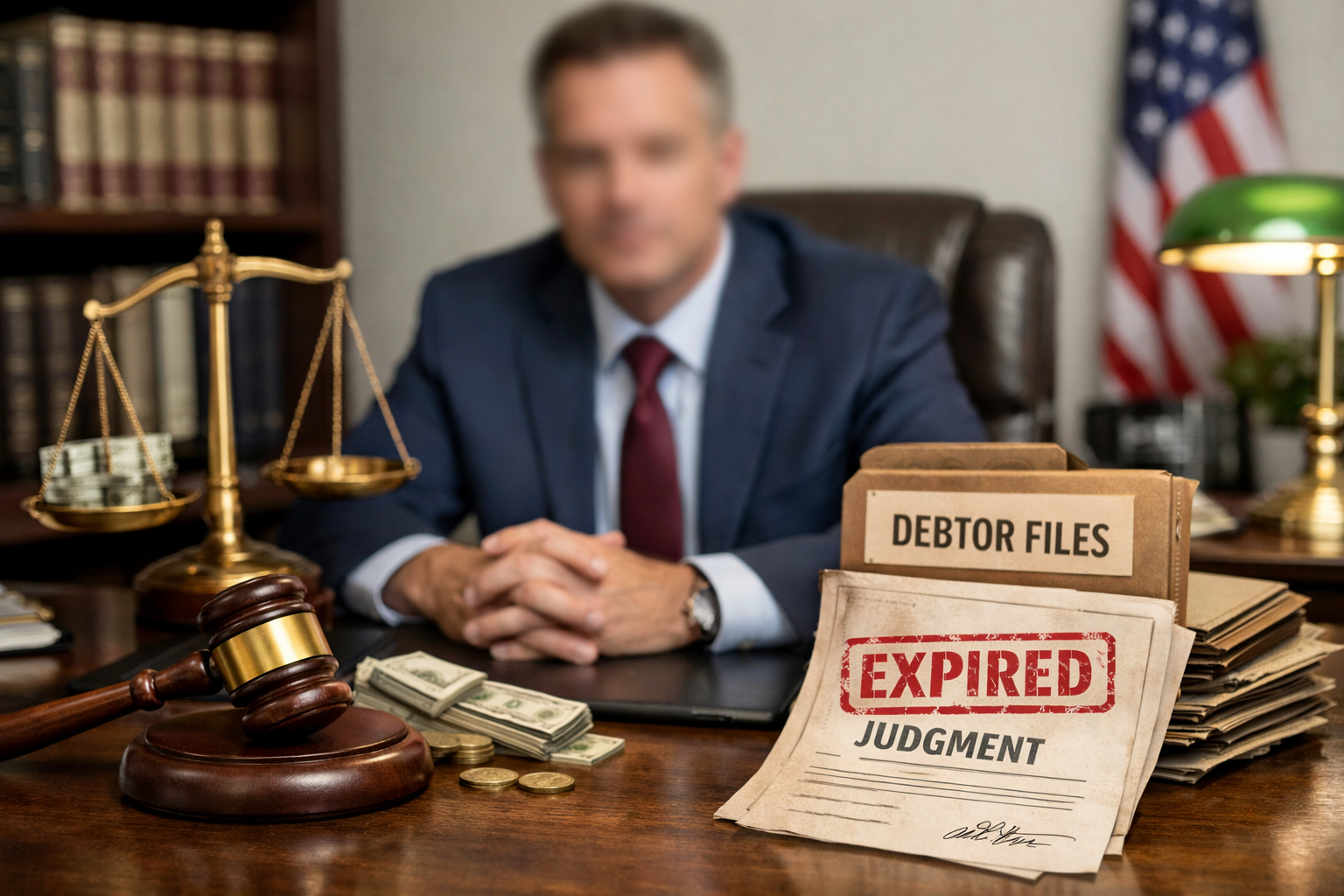
Funders must act quickly after obtaining a judgment to avoid expiration risks and preserve enforcement opportunities that lead to successful recovery.
.jpg)
Bankruptcy can significantly change how merchant cash advance obligations are handled, and an MCA attorney can help businesses and funders protect their financial and legal interests.

An MCA attorney can help businesses and funders recover overdue payments while protecting valuable customer relationships and enforcing contractual rights.

Understanding current trends in debt collection litigation helps funders maximize recovery, maintain compliance, and leverage the expertise of a local debt collections attorney.

Local legal expertise ensures funders and lenders can efficiently recover debts, enforce contracts, and protect their business interests with a skilled debt collections attorney.
.jpg)
Enforcement of judgment is the key mechanism that allows commercial creditors and MCA funders to turn court victories into actual financial recovery.

Understanding the difference between enforcement of judgment and judgment collection helps creditors choose the most effective strategy to turn a court ruling into actual payment.

Merchant cash advance collections can disrupt business credit and financing opportunities, but proactive legal strategies and timely resolution can help limit long-term damage.

Usury and recharacterization claims are common defense tactics in MCA disputes, but strong contracts and strategic legal defense allow funders to enforce agreements effectively.

This article explains why commercial creditors need a judgment collections attorney to enforce court judgments across state lines, navigate multi-jurisdictional laws, locate debtor assets, and significantly increase recovery rates.

A post-judgment attorney protects funders from costly enforcement mistakes and maximizes successful judgment recovery through strategic legal action.

This guide explains when funders should turn overdue accounts over to a debt collection lawyer to protect recovery rates and enforce stronger legal remedies.

Working with an experienced Collection Attorney gives commercial creditors the legal power and strategic support needed to significantly increase their post judgment recovery rate.

A complete 2025 guide for funders on which U.S. states require commercial financing disclosures, deal thresholds, and practical compliance strategies.

This article explains how MCA funders can stay compliant by avoiding disguised-loan pitfalls, strengthening contracts, and partnering with collections attorneys to enforce receivables and recover funds effectively.

A clear guide explaining how creditors can legally revive dormant New York judgments and the role of a judgment enforcement attorney in the process.

New York’s 20-year judgment lifespan offers creditors extensive enforcement power, but strict renewal rules and complex lien timelines make strategic legal guidance essential.
This blog shows how MCA funders can use AI for smarter commercial debt recovery while relying on a collections lawyer to ensure compliance, enforceability, and risk mitigation.

This blog explains when courts may treat very small business debts like consumer debt and shows how MCA funders can use a collections attorney to ensure compliant, enforceable debt recovery.

Explore how changing laws, court rulings, and enforcement trends are reshaping merchant cash advance (MCA) collections — and what funders must do to stay compliant.

This article explains how interest, fees, and legal costs influence the real price of business debt collection and how attorneys help companies manage and reduce these costs effectively.