.jpg)
March 25, 2026
How Judgment Attorneys Address Intentional Judgment Avoidance TacticsJudgment attorneys help creditors overcome debtor avoidance tactics by locating assets and pursuing lawful enforcement strategies after a court ruling.


Merchant Cash Advances (MCAs) provide rapid funding for businesses, but defaults pose a significant risk for funders. Recovering unpaid balances requires professional intervention, often through a collections attorney or a traditional collection agency. While both aim to recover debts, their approaches differ dramatically in effectiveness.
This article examines why a debt collections attorney outperforms a collection agency for MCA funders, focusing on legal authority, strategic advantages, and superior outcomes. At David I. Mizrahi Law P.C., we specialize in delivering results where agencies fall short.
A collection agency relies on persuasion—phone calls, emails, and letters—to recover debts, but lacks the power to enforce payment. A collection attorney, as a licensed legal professional, wields the authority to initiate court proceedings, secure judgments, and enforce recovery through legal mechanisms. For MCA funders dealing with non-paying merchants, this distinction is critical to achieving meaningful results.
When merchants ignore outreach or become uncooperative, collection agencies are often powerless. Their tools are limited to negotiation, which may fail against evasive debtors. A collections attorney, however, can escalate matters by:
This legal leverage ensures debtors face real consequences, driving faster and more effective recovery.
Collections debt attorneys employ sophisticated strategies that agencies cannot replicate. Our approach includes:
We craft authoritative communications that signal imminent legal consequences, often prompting payment without court involvement. These efforts carry more weight than agency outreach, which lacks legal backing.
Using advanced investigative techniques, we identify and pursue debtor assets, ensuring recovery efforts focus on viable targets. Agencies typically lack the resources or expertise for such precision.
Unmasking the Debtor: Unlike agencies that stop at the corporate name, we utilize the 2026 New York LLC Transparency Act to identify the individuals behind the corporate veil. As of January 1, 2026, LLCs authorized to do business in New York must disclose their beneficial owners. If a debtor hides behind a series of shell companies, we use this new statutory transparency—often via court-ordered access—to target the assets of the actual owners and enforce personal guarantees with pinpoint accuracy.
Every MCA default requires a tailored plan. We analyze the debtor’s financial profile and craft solutions—ranging from negotiation to litigation—that maximize recovery. Agencies often rely on generic tactics, missing nuanced opportunities.
When negotiations stall, we file lawsuits to secure court judgments, enabling enforceable recovery methods. This legal authority is exclusive to attorneys and unavailable to agencies.
Some funders hesitate to hire a collections attorney, assuming agencies are cheaper. However, this is not accurate. Moreover, the return on investment with legal representation often surpasses agency efforts, especially for high-value MCA defaults. The ability to secure enforceable outcomes typically results in higher net returns compared to agency fees, which may yield minimal results.
Navigating commercial debt recovery requires adherence to complex regulations. Even in MCA collections, missteps can lead to legal challenges or reputational harm. MCA collection attorneys operate under strict ethical standards, ensuring compliance with laws like the Uniform Commercial Code (UCC) and other local statutes. At David I. Mizrahi Law P.C., we safeguard your business by:
MCA funders operate in a high-stakes environment where defaults demand swift, decisive action. A professional collections attorney provides:
Our track record at demonstrates success in recovering MCA balances through strategic, legally empowered action.
Don’t rely on limited agency efforts when a merchant defaults. Choose the best collections attorney in New York and New Jersey to enforce your rights and recover what you’re owed. We tailor our approach to your case, leveraging legal tools and expertise to deliver results. Book a consultation and see how our law firm can transform non-payment into recovery success.
Contact David I. Mizrahi Law P.C. to start recovering your MCA funds now.
Legal services may involve higher initial costs, but not always. Also, the ability to secure enforceable outcomes often leads to better returns. We offer contingency-based fees to minimize financial risk.
Yes. Through lawsuits, subpoenas, and court-ordered remedies, attorneys can compel payment when debtors refuse to engage, surpassing agency capabilities.
Absolutely. Licensed attorneys adhere to strict legal and ethical standards, protecting your business from compliance issues and reputational risks.
Timelines vary based on case complexity and debtor cooperation. Some cases settle in days while others may take several months. Legal action, such as lawsuits or judgments, often accelerate recovery compared to agency methods.
Yes. We use the Uniform Voidable Transactions Act (UVTA) and the new 2026 LLC Transparency Act to trace assets transferred to insiders or "successor" entities. We "pierce the veil" where agencies simply hit a dead end.
Under the new FAIR Act, "abusive" acts are broadly defined. If an agency makes a technical error—like ignoring the $4,080 EIPA exemption in a bank levy—your firm could be held liable for unfair business practices. A law firm provides the technical precision to ensure every levy is airtight.
Judgment attorneys help creditors overcome debtor avoidance tactics by locating assets and pursuing lawful enforcement strategies after a court ruling.

Courts evaluate bad-faith merchant conduct in MCA breach lawsuits by reviewing contract terms, merchant actions, and financial evidence to determine whether repayment obligations were intentionally violated.

When multiple MCA funders compete for the same merchant receivables or assets, legal guidance helps determine priority rights, resolve disputes, and pursue structured recovery strategies while maintaining compliance.

When a merchant cash advance default occurs, funders must strategically decide early between settlement negotiations and litigation, and an experienced MCA collections attorney helps evaluate debtor behavior, financial exposure, and enforcement potential to determine the most effective recovery path.

Attorneys strengthen commercial debt recovery by tracing financial paper trails before litigation, allowing creditors to evaluate collectability, build stronger legal claims, and position cases for more effective enforcement.

Judgment recovery services help commercial creditors and funders enforce court-awarded debts and convert legal victories into actual financial recovery.

Cash flow disruptions from unpaid commercial accounts can threaten business stability, and involving a commercial collections lawyer helps creditors recover outstanding balances through structured and legally compliant collection strategies.

New York collection attorneys help businesses and funders recover charged-off commercial debt through strategic legal enforcement and structured recovery actions.

MCA funders face significant enforcement obstacles after judgment, making strategic action with a judgment collection lawyer essential for successful recovery.
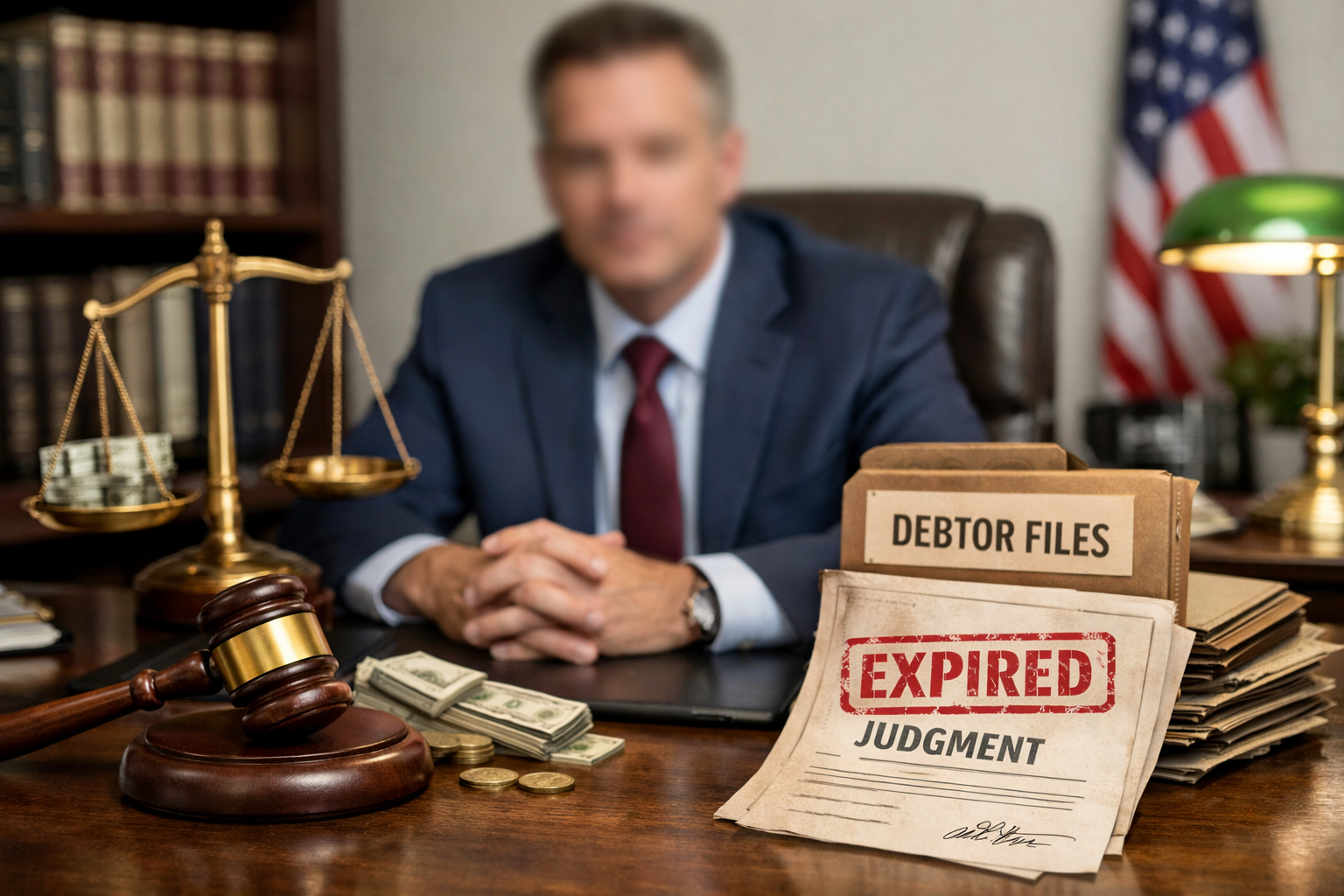
Funders must act quickly after obtaining a judgment to avoid expiration risks and preserve enforcement opportunities that lead to successful recovery.
.jpg)
Bankruptcy can significantly change how merchant cash advance obligations are handled, and an MCA attorney can help businesses and funders protect their financial and legal interests.

An MCA attorney can help businesses and funders recover overdue payments while protecting valuable customer relationships and enforcing contractual rights.

Understanding current trends in debt collection litigation helps funders maximize recovery, maintain compliance, and leverage the expertise of a local debt collections attorney.

Local legal expertise ensures funders and lenders can efficiently recover debts, enforce contracts, and protect their business interests with a skilled debt collections attorney.
.jpg)
Enforcement of judgment is the key mechanism that allows commercial creditors and MCA funders to turn court victories into actual financial recovery.

Understanding the difference between enforcement of judgment and judgment collection helps creditors choose the most effective strategy to turn a court ruling into actual payment.

Merchant cash advance collections can disrupt business credit and financing opportunities, but proactive legal strategies and timely resolution can help limit long-term damage.

Usury and recharacterization claims are common defense tactics in MCA disputes, but strong contracts and strategic legal defense allow funders to enforce agreements effectively.

This article explains why commercial creditors need a judgment collections attorney to enforce court judgments across state lines, navigate multi-jurisdictional laws, locate debtor assets, and significantly increase recovery rates.

A post-judgment attorney protects funders from costly enforcement mistakes and maximizes successful judgment recovery through strategic legal action.

This guide explains when funders should turn overdue accounts over to a debt collection lawyer to protect recovery rates and enforce stronger legal remedies.

Working with an experienced Collection Attorney gives commercial creditors the legal power and strategic support needed to significantly increase their post judgment recovery rate.

A complete 2025 guide for funders on which U.S. states require commercial financing disclosures, deal thresholds, and practical compliance strategies.

This article explains how MCA funders can stay compliant by avoiding disguised-loan pitfalls, strengthening contracts, and partnering with collections attorneys to enforce receivables and recover funds effectively.

A clear guide explaining how creditors can legally revive dormant New York judgments and the role of a judgment enforcement attorney in the process.

New York’s 20-year judgment lifespan offers creditors extensive enforcement power, but strict renewal rules and complex lien timelines make strategic legal guidance essential.
This blog shows how MCA funders can use AI for smarter commercial debt recovery while relying on a collections lawyer to ensure compliance, enforceability, and risk mitigation.

This blog explains when courts may treat very small business debts like consumer debt and shows how MCA funders can use a collections attorney to ensure compliant, enforceable debt recovery.

Explore how changing laws, court rulings, and enforcement trends are reshaping merchant cash advance (MCA) collections — and what funders must do to stay compliant.

This article explains how interest, fees, and legal costs influence the real price of business debt collection and how attorneys help companies manage and reduce these costs effectively.